
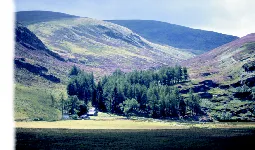

The glen esk history stretches back thousands of years, weaving together threads of Pictish settlement, medieval clan warfare, agricultural transformation, and Victorian romanticism into a single, remarkably rich tapestry. Nestled in the Angus Glens of northeast Scotland, Glen Esk runs roughly twenty miles inland from the market town of Edzell, following the course of the River North Esk toward the wild moorland plateau that borders Deeside. Few landscapes in Scotland carry such layered significance, and fewer still have managed to retain so much of their original character into 2026.
Glen Esk History: Origins, Early Settlement, And Pictish Legacy
The earliest evidence of human presence in Glen Esk reaches back well beyond recorded history. Archaeological surveys conducted across the glen have identified standing stones, cairns, and cup-and-ring marked rocks that point to Bronze Age and possibly Neolithic occupation. These communities understood the valley’s strategic value long before any written account existed, settling along the river terraces where fertile soil and reliable water made survival viable even through harsh Scottish winters.

Pictish Roots And The Shaping Of Early Glen Esk History
The Picts left their most visible mark on the landscape through symbol stones scattered across Angus. While the densest concentrations appear closer to Brechin and Aberlemno, the upland margins of Glen Esk show clear signs of Pictish territorial activity. Place names across the glen preserve fragments of Pictish and early Gaelic vocabulary, offering linguists clues about how communities organized land, named landmarks, and passed knowledge across generations. The glen was never an isolated backwater; it functioned as a corridor linking coastal Angus with the Mounth passes into Deeside.
Early Medieval Christianity And Monastic Influence
Christianity arrived in the Angus Glens during the sixth and seventh centuries, carried by missionaries moving through existing Pictish networks. Small chapels and burial grounds established during this period survive in fragmentary form across the glen. The dedication of certain sites to obscure Celtic saints reflects the dense web of early medieval religious activity that predated the later Romanesque church building programme. These foundations shaped patterns of land tenure, community gathering, and seasonal practice that persisted for centuries after the formal church structure changed around them.
Norse Influence And The Formation Of Medieval Estates
Although Norse raiding and settlement had less direct impact on upland Angus than on coastal regions, the political upheavals of the Viking Age restructured the broader territorial landscape within which glen esk history unfolded. The consolidation of Scottish kingship under the MacAlpin dynasty and their successors drew the glen into a more formally organized feudal system. By the twelfth century, the valley was being parcelled into recognizable estates, setting the pattern of land ownership that would define social life here for the next eight hundred years.
Clan Conflict, Feudal Power, And The Turbulent Middle Ages In Glen Esk
Medieval glen esk history is inseparable from the rivalries of the great noble houses whose landholdings bordered and overlapped in the Angus Glens. The glen sat within the sphere of influence of the Earls of Angus, whose fortunes rose and fell dramatically across the fourteenth and fifteenth centuries. Control of upland routes, grazing rights, and military recruitment made the glen a prize worth contesting, and the landscape bears the scars of that contest in the form of ruined tower houses and abandoned fermtouns.

Tower Houses And Defensive Architecture Of The Glen
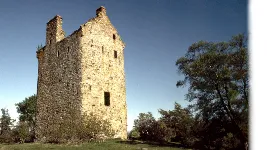
The most tangible monuments of medieval power in Glen Esk are its tower houses. Invermark Castle, standing at the head of the glen near Loch Lee, is the finest surviving example. Built in the sixteenth century, it served as a residence for the Lindsay Earls of Crawford and as a controlling point for the Mounth passes. Its construction reflects the persistent insecurity of highland borderlands, where raiding from the north remained a credible threat long after lowland Scotland had moved toward less militarized forms of architecture. The castle’s silhouette still dominates the upper glen today.
Fermtouns, Runrig Agriculture, And Community Life
Beneath the level of great nobles and tower houses, the daily texture of glen esk history was woven by farming communities organized into fermtouns. These clusters of families worked the land collectively under the runrig system, dividing strips of cultivable ground in ways designed to distribute both good and poor soil fairly across households. The landscape of ridge and furrow they created can still be traced in aerial photographs of the glen’s lower slopes. This agricultural system endured with relatively little change from the early medieval period right through to the improving movement of the eighteenth century.
Religious Life, Parish Records, And Social Structure
The medieval parish church at Lochlee served as the spiritual and administrative centre of upper Glen Esk. Parish records, though fragmentary before the seventeenth century, begin to document individual families and reveal the social hierarchy operating beneath the surface of the fermtoun system. Tenant farmers, cottars, and landless labourers occupied distinct positions within a tightly stratified community. The rhythms of church attendance, baptism, marriage, and burial created the documentary foundation upon which later genealogical research into glen esk history would depend.
| Landmark | Period | Significance | Current Status |
|---|---|---|---|
| Invermark Castle | 16th century | Lindsay stronghold controlling Mounth passes | Ruined tower, accessible to visitors |
| Lochlee Parish Church | Medieval–19th century | Spiritual and administrative centre of upper glen | Victorian rebuild, active graveyard |
| Gannochy Gorge | Geological / Victorian leisure | Natural scenic feature popularized during Romantic era | Nature reserve, walking trails |
| Retreats and Shooting Lodges | 19th–20th century | Evidence of Victorian sporting estate transformation | Several converted to private use |
| Standing Stones, Rowan Hill | Bronze Age | Evidence of prehistoric ritual landscape | Scheduled Ancient Monument |
Glen Esk History Through The Agricultural Revolution And Victorian Transformation
The eighteenth century brought profound disruption to communities whose way of life had changed relatively slowly for centuries. Agricultural improvement swept through the Angus Glens with particular force, as landlords enclosing land, consolidating holdings, and introducing new crop rotations fundamentally restructured the relationship between people and the landscape. Glen esk history during this period is a story of both loss and adaptation, as some families were displaced while others found new roles within the emerging commercial farming economy.

Clearance, Emigration, And The Reshaping Of The Glen’s Population
Unlike the more dramatic and better-documented clearances of the Highland west, the depopulation of Glen Esk occurred gradually and without the same violent confrontations. Nevertheless, the effect on community life was significant. Families who had worked the same strips of runrig ground for generations were consolidated onto smaller holdings or pushed off the land entirely. Many emigrated to the industrial towns of lowland Scotland or sought passage to Canada and the United States. The farmsteads they left behind were absorbed into the expanding sheep runs and deer forests that came to characterize the upland Angus landscape by the mid-nineteenth century.
Victorian Sporting Estates And The New Identity Of Glen Esk
The Victorian era brought a new kind of inhabitant to the glen in the form of wealthy sporting tenants seeking grouse moors and deer forests. This transformation reshaped both the physical landscape and the social hierarchy of glen esk history. Shooting lodges replaced farmhouses, gamekeepers displaced shepherds, and the management of wildlife for sport became the dominant land use across vast tracts of the upper glen. Queen Victoria’s enthusiasm for the Scottish Highlands, expressed most visibly at Balmoral, created a cultural framework that made Glen Esk’s wild landscape fashionable and economically valuable in entirely new ways.
Heritage Preservation And Living Memory In The Modern Glen
The twentieth century saw growing awareness of the need to document and preserve what remained of older traditions in Glen Esk. The Glenesk Folk Museum at Tarfside, established through the efforts of local people and historians, became one of the most important repositories of rural Angus material culture in Scotland. Photographs, farm implements, domestic objects, and oral histories collected there represent an irreplaceable record of daily life across several centuries. This commitment to local heritage ensures that glen esk history remains a living, accessible subject rather than a purely academic one, and it continues to draw researchers and visitors to the glen in 2026.
Conclusion
The depth and variety of glen esk history make it one of the most rewarding subjects for anyone with an interest in Scottish rural heritage, landscape, and community. From Bronze Age standing stones to Victorian shooting lodges, from Pictish symbol stones to the painstakingly preserved collections of the Glenesk Folk Museum, the glen offers an extraordinarily complete record of how people have shaped and been shaped by a single Scottish valley across millennia. For those who want to explore this history further, Invermark Books provides a curated selection of specialist titles, local histories, and archival materials dedicated to the Angus Glens and their remarkable past.
Xem thêm: glen lethnot history